


Performance reviews can feel intimidating — but they’re actually one of the best tools for career growth. Each company evaluates performance a little differently, using methods like annual reviews, self-assessments, or 360 feedback.
Here’s a breakdown of the most common types of performance reviews, complete with scoring guidelines, measurement examples, and example phrases you might hear during the process.
1. Annual Performance Review
The traditional annual review takes a big-picture look at your performance over the past year. It’s often linked to raises, bonuses, or promotions.
Typical Scoring System:
- 5 – Exceptional (Exceeds all goals by 20% or more)
- 4 – Exceeds Expectations (Exceeds most goals by 10–20%)
- 3 – Meets Expectations (Achieves 90–100% of goals)
- 2 – Needs Improvement (Achieves 70–89% of goals)
- 1 – Unsatisfactory (Fails to meet 70% of goals)
Measurement Percentages:
- 40%: Goal Achievement
- 30%: Collaboration and Communication
- 20%: Initiative and Innovation
- 10%: Professional Development
Example Text:
“You’ve exceeded expectations in project management, completing 95% of deliverables on time and under budget. For next year, focus on delegating tasks to support leadership growth.”
2. Mid-Year or Quarterly Reviews
These reviews happen two to four times a year to measure progress toward annual goals and make timely adjustments.
Typical Scoring System:
- Green – On Track (Goal progress at 75% or higher)
- Yellow – Needs Attention (Goal progress between 50–74%)
- Red – Off Track (Goal progress below 50%)
Measurement Percentages:
- 50%: Progress Toward Goals
- 25%: Quality of Work
- 15%: Time Management
- 10%: Communication and Collaboration
Example Text:
“You’ve achieved 80% of your quarterly target and handled client issues effectively. Next quarter, focus on reducing turnaround time by 10%.”
3. Self-Assessment Review
In a self-assessment, you evaluate your own progress before your manager gives feedback. It’s a chance to highlight wins and reflect on challenges.
Typical Scoring System:
- 5 – Strongly Agree (I consistently exceed expectations)
- 4 – Agree (I often exceed expectations)
- 3 – Neutral (I meet expectations)
- 2 – Disagree (I occasionally fall short)
- 1 – Strongly Disagree (I need significant improvement)
Measurement Percentages:
- 50%: Self-Rated Goal Achievement
- 30%: Professional Growth and Learning
- 20%: Alignment with Team/Company Goals
Example Text:
“I completed three large projects ahead of schedule and mentored two new hires. I’d like to continue developing leadership skills through team management opportunities.”
4. 360-Degree Feedback Review
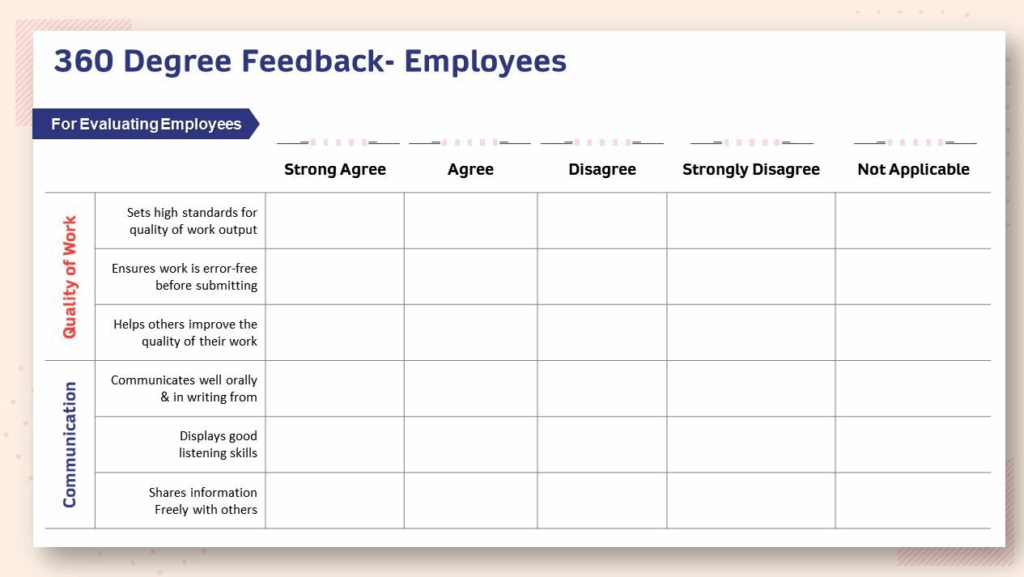
This method collects feedback from multiple sources — managers, peers, direct reports, and sometimes clients — for a complete picture of your performance.
Typical Scoring System:
- 5 – Outstanding Collaboration and Leadership
- 4 – Exceeds Expectations from Most Reviewers
- 3 – Consistently Meets Expectations
- 2 – Improvement Needed in Some Areas
- 1 – Unsatisfactory from Multiple Reviewers
Measurement Percentages:
- 30%: Peer Feedback
- 30%: Manager Feedback
- 20%: Direct Report Feedback
- 20%: Client or External Partner Feedback
Example Text:
“Your peers recognize your consistent support and mentorship. A few mentioned wanting to see you take a more visible role in project kick-offs.”
5. Objective-Based Review (OKRs or KPIs)
This approach measures your performance against quantifiable goals — typically tracked through metrics or KPIs.
Typical Scoring System:
- 100%+ – Exceeds Goal
- 90–99% – Fully Meets Goal
- 70–89% – Partially Meets Goal
- Below 70% – Does Not Meet Goal
Measurement Percentages:
- 60%: Objective Results (sales numbers, output metrics, etc.)
- 20%: Efficiency and Process Improvement
- 10%: Team Contribution
- 10%: Professional Development
Example Text:
“Your KPI for Q2 was to boost customer engagement by 25%. You achieved 30% through consistent communication and targeted campaigns.”
6. Project-Based Review
This review happens after major projects and focuses on specific contributions, teamwork, and outcomes.
Typical Scoring System:
- 5 – Exceptional Project Leadership
- 4 – Strong Contributor
- 3 – Solid Performance
- 2 – Some Challenges Noted
- 1 – Major Issues or Missed Deliverables
Measurement Percentages:
- 40%: Project Results
- 30%: Collaboration and Communication
- 20%: Problem-Solving and Adaptability
- 10%: Time Management
Example Text:
“You effectively managed all project milestones and improved communication between departments. Consider building a checklist process to streamline project tracking next time.”
7. Continuous or Ongoing Feedback Reviews
In this modern approach, performance is measured through regular check-ins instead of annual evaluations.
Typical Scoring System:
- Green – Excellent Weekly Progress
- Yellow – Moderate Progress
- Red – Needs Focus
Measurement Percentages:
- 50%: Achievement of Short-Term Goals
- 25%: Initiative and Ownership
- 15%: Communication and Feedback Responsiveness
- 10%: Adaptability
Example Text:
“You’ve completed 90% of your weekly goals and improved client communication speed by 15%. Let’s focus next on documenting best practices for the team.”
How to Make Scoring Work for You
No matter which type of review you experience, use scoring data to your advantage:
- Track your progress monthly: Keep a digital tracker with goal completion rates.
- Ask for specific benchmarks: Clarify what a “5” or “Exceeds Expectations” looks like.
- Use percentages to measure growth: For example, improving from 80% to 92% goal completion shows quantifiable success.
- Tie performance metrics to career goals: Use review results to make your case for raises, promotions, or new responsibilities.
Example SMART goal:
“Achieve 95% on all quarterly client satisfaction scores by implementing faster response times and proactive communication.”
The Bottom Line
Performance reviews are more than a grade — they’re a roadmap for growth. Whether your company uses 360 feedback or KPI scoring, the key is to track your progress, understand your measurement system, and use feedback as fuel for your next career milestone.
The better you understand how you’re being evaluated, the easier it is to grow, lead, and succeed.