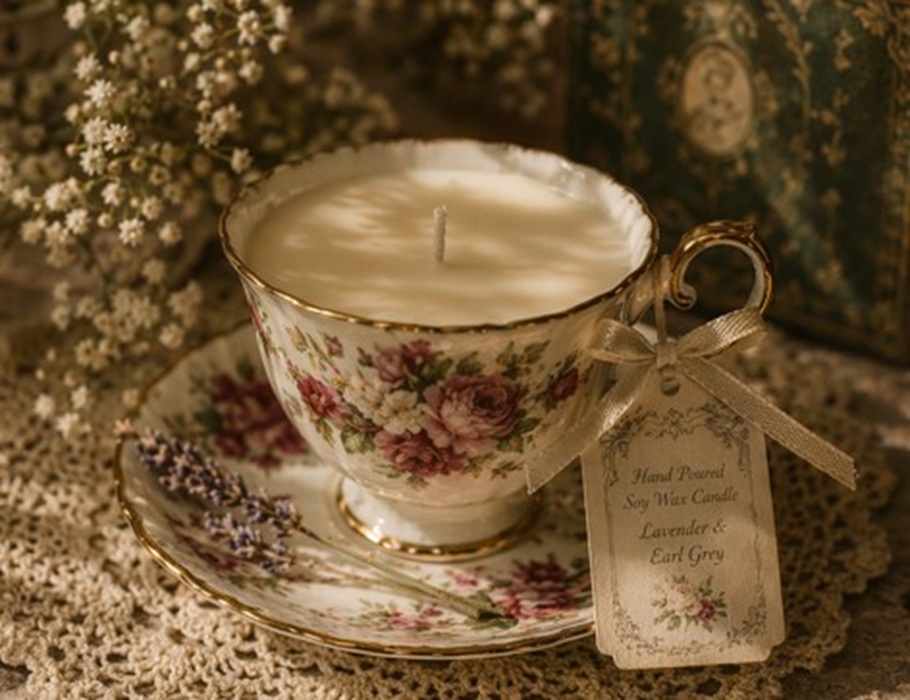
Teacup candles are one of those rare side hustles that check all the boxes: they are beautiful, giftable, beginner-friendly, and easy to position as a premium handmade product. The right teacup candle can feel part home decor, part collectible, and part luxury gift. That combination is exactly why they can work so well as a small handmade business.
On marketplaces like Etsy, teacup candles commonly show up around the low teens on the budget end and into the mid-$20s or higher for more elevated or vintage-styled versions. Current examples include listings around $10 to $12, many around $15 to $28, and some luxury-leaning options at roughly $36.
If you love thrifted treasures, old china, floral patterns, lace, soft color palettes, and handmade products with a story, teacup candles can be an excellent side hustle to test.
Why teacup candles sell
They stand out from ordinary jar candles because the container is part of the appeal. A vintage teacup feels more personal, more giftable, and more decorative than a standard vessel. Buyers are not just paying for wax and fragrance. They are paying for presentation, nostalgia, and uniqueness.
That is especially true when you position them in a grannycore or luxury vintage style. Think rose patterns, gold trim, soft ivory wax, classic scents, and elegant packaging. A product like that can feel much more like a boutique gift than a basic candle, which is why pricing can climb beyond typical budget candle ranges. This is an inference based on current handmade marketplace pricing, where more decorative and premium-positioned teacup candles are listed above simpler versions.
What teacup candles can sell for
A practical pricing guide looks like this:
Budget / simple style: about $10 to $15
Mid-range handmade style: about $16 to $28
Luxury vintage style: about $25 to $36 or more
What pushes your candle toward the higher end?
- A truly pretty vintage teacup
- Coordinated saucer included
- Luxury scent blend
- Strong branding and packaging
- Clean, creamy wax finish
- Gift-ready presentation
- Limited-edition or one-of-a-kind vessel
In other words, the teacup itself matters a lot. A plain secondhand cup may support a lower price. A delicate floral bone china cup with gold detailing and a matching saucer can help justify premium pricing.
What you need to make teacup candles
For a beginner-friendly version, gather:
- Vintage teacups and saucers
- Soy wax flakes
- Pre-tabbed candle wicks
- Wick stickers or a heat-safe adhesive method
- Candle fragrance oil approved for candle use
- Wick centering tool or popsicle sticks
- Pouring pitcher, Thermometer and Heat Plate
- Rubbing alcohol and paper towels
- Warning labels for the bottom of finished candles
General candle guidance recommends adding fragrance at about 185°F for many common candle workflows, trimming wicks to 1/4 inch after cooling, and placing warning labels on the finished candle. A properly wicked container candle should melt to the edges, burn without excess soot, and form a melt pool roughly 1/4 to 3/4 inch deep.
A note on picking the right teacups
Not every teacup is a good candle vessel.
Choose cups that are:
- Free from cracks
- Stable on a flat surface
- Thick enough to handle heat
- Clean and dry
- Wide enough at the top for a proper melt pool
Avoid chipped or damaged teacups, especially ones with structural cracks. Since teacups vary in width and shape, wick testing matters. Container candle performance depends heavily on the vessel diameter and how the wax melts across the top.
Best scents for a vintage luxury aesthetic
To match your brand direction, start with classic, soft, nostalgic scent profiles:
- Lavender vanilla
- Earl Grey and bergamot
- Rose and sandalwood
- Gardenia
- Vanilla bean
- Chamomile
- White tea
- Honey pear
- Cashmere plum
- Amber and rose
Luxury usually feels more elevated when the scent is soft and layered rather than loud and sugary. Your bestsellers will likely come from two directions: familiar comfort scents and romantic floral blends. That is a branding recommendation rather than a sourced market statistic, but it aligns well with the kinds of vintage-style candle listings currently seen in handmade marketplaces.
Step-by-step: How to Make Teacup Candles
Step 1: Clean and inspect the teacup
Wash the teacup and saucer well, then let them dry completely. After that, wipe the inside with rubbing alcohol to remove oils, dust, or residue.
This matters because your wick sticker or adhesive needs a clean surface to stick properly. DIY teacup candle tutorials commonly recommend cleaning first and securing the wick before pouring.
Step 2: Attach the wick
Place the wick tab in the center of the teacup bottom using a wick sticker or a small amount of heat-safe adhesive. Press firmly.
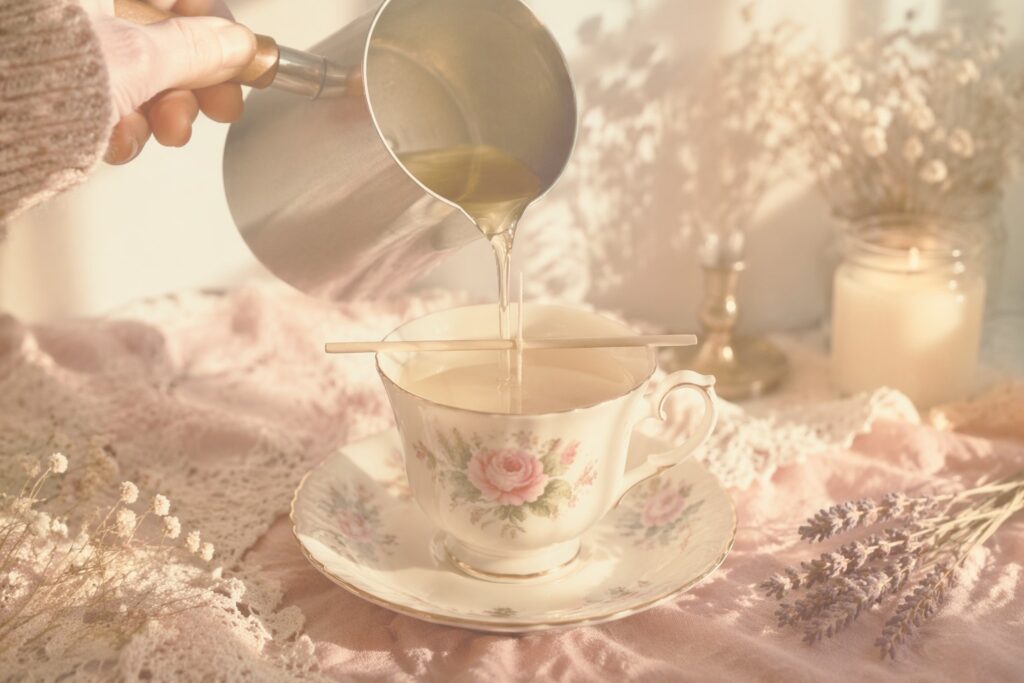
Use a wick centering tool, skewer, or popsicle stick across the top of the cup to keep the wick upright while pouring. Keeping the wick centered is a standard part of teacup and container candle making.
Step 3: Measure your wax
Estimate how much wax your teacup holds by filling it with water first, then pouring that water into a measuring cup. Dry the teacup completely afterward. Use that measurement as a rough guide for how much wax you need.
Because wax flakes melt down, you will usually need more flakes than the cup’s liquid capacity first suggests. Many makers simply measure a little extra and save leftover wax for the next pour.
Step 4: Melt the wax
Place soy wax flakes into a pouring pitcher and melt them using a double boiler. Heat gradually and stir gently.
Basic candle guidance says to heat wax until it reaches around 185°F before adding fragrance in many standard container-candle recipes.
Step 5: Add fragrance oil
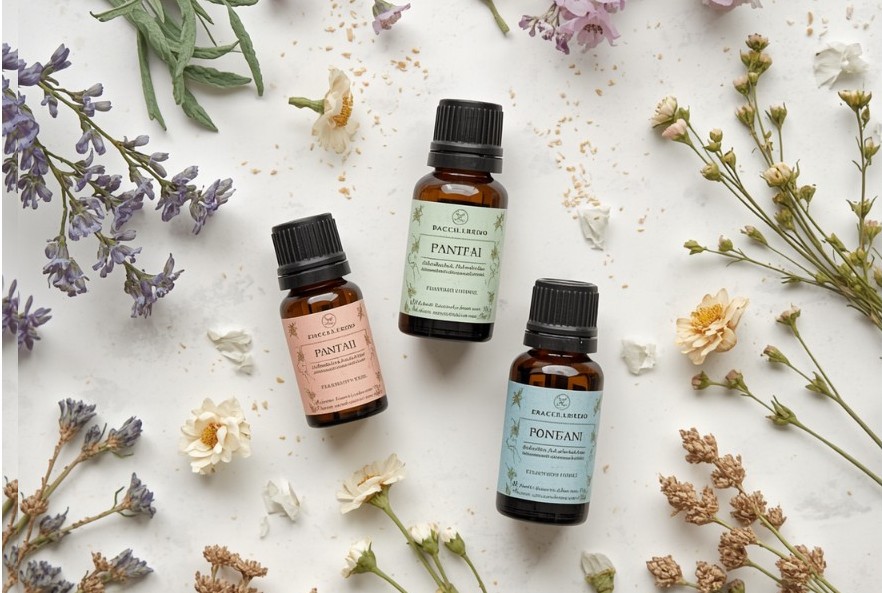
Once your wax reaches the recommended temperature for your wax type, remove it from direct heat and add fragrance oil according to your wax manufacturer’s guidance.
A good starting point is using about a 6% fragrance load, which works out to roughly 1 ounce of fragrance oil per pound of wax. Keep in mind that adding more fragrance doesn’t always make the candle smell stronger—too much can actually lead to poor burning performance or other issues.
Stir slowly for about 1 to 2 minutes so the fragrance fully binds with the wax.
| Label Name | Scent Description | Teaspoon Recipe | Drop Recipe |
|---|---|---|---|
| Lavender Lace | Soft lavender blooms wrapped in warm vanilla cream. A calming, cozy scent inspired by quiet afternoons and vintage charm. | 0.6 tsp lavender, 0.4 tsp vanilla | 60 drops lavender, 40 drops vanilla |
| Velvet Rosewood | Romantic rose petals layered with smooth sandalwood and a hint of sweetness. Elegant, warm, and timeless. | 0.35 tsp rose, 0.45 tsp sandalwood, 0.2 tsp vanilla | 35 drops rose, 45 drops sandalwood, 20 drops vanilla |
| Afternoon Tea | Bright bergamot and soft lavender with a creamy finish. A delicate, tea-inspired scent perfect for slow mornings. | 0.5 tsp bergamot, 0.3 tsp lavender, 0.2 tsp vanilla | 50 drops bergamot, 30 drops lavender, 20 drops vanilla |
| Garden Bloom | Lush white florals with a soft powdery finish. Classic, feminine, and beautifully nostalgic. | 0.4 tsp jasmine, 0.35 tsp ylang ylang, 0.25 tsp vanilla | 40 drops jasmine, 35 drops ylang ylang, 25 drops vanilla |
| Vanilla Heirloom | Rich vanilla with a touch of warm wood. Simple, comforting, and quietly luxurious. | 0.8 tsp vanilla, 0.2 tsp sandalwood | 80 drops vanilla, 20 drops sandalwood |
| Golden Calm | Gentle chamomile blended with soft sweetness and floral notes. A peaceful, soothing scent for cozy evenings. | 0.5 tsp chamomile, 0.3 tsp lavender, 0.2 tsp vanilla | 50 drops chamomile, 30 drops lavender, 20 drops vanilla |
| White Linen Tea | Fresh citrus and delicate florals with a clean, airy finish. Light, elegant, and spa-like. | 0.4 tsp bergamot, 0.3 tsp jasmine, 0.3 tsp sandalwood | 40 drops bergamot, 30 drops jasmine, 30 drops sandalwood |
| Honey Orchard | Soft fruit notes with warm sweetness and subtle depth. Fresh, cozy, and inviting. | 0.5 tsp orange, 0.3 tsp vanilla, 0.2 tsp sandalwood | 50 drops orange, 30 drops vanilla, 20 drops sandalwood |
| Plum Cashmere | A warm blend of soft fruit and smooth woods. Rich, cozy, and softly luxurious. | 0.4 tsp orange, 0.4 tsp sandalwood, 0.2 tsp vanilla | 40 drops orange, 40 drops sandalwood, 20 drops vanilla |
| Amber Petals | Romantic rose with warm amber tones and a hint of sweetness. A timeless, glowing fragrance. | 0.4 tsp rose, 0.35 tsp sandalwood, 0.25 tsp vanilla | 40 drops rose, 35 drops sandalwood, 25 drops vanilla |
Step 6: Pour into the teacup
Carefully pour the wax into the teacup, leaving a little space at the top. Try to keep the wick centered and steady.
Set the candle somewhere safe and let it cool undisturbed. A smooth top usually comes from pouring carefully, working at the correct temperature, and letting the candle cool slowly.
Step 7: Let it cure
Once the wax hardens, trim the wick to about 1/4 inch after cooling.
For many soy candles, the scent improves after curing for several days before selling. Exact cure time depends on the wax and fragrance combination, so follow your wax supplier’s guidance and always test-burn before selling.
Step 8: Test-burn every new candle style
This is the step many beginners want to rush, but it is one of the most important.
Test one candle in each teacup style and fragrance combination to make sure:
- The wax melts evenly across the top
- The flame is not too large
- The container does not overheat
- The candle does not tunnel badly
- There is minimal soot
A properly wicked container candle should burn to the edges and maintain a reasonable melt pool without excessive smoking.
Step 9: Label it properly
Attach a warning label to the bottom and include simple candle care instructions, such as:
- Trim wick to 1/4 inch before each burn
- Burn within sight
- Keep away from children and pets
- Do not burn on or near anything flammable
- Stop use when a small amount of wax remains
Warning labels on finished candles are standard guidance in candle-making education resources.
How to make your teacup candles look more luxurious
This is where the profit potential gets better.
A simple candle can be nice. A beautifully branded candle can feel worth gifting.
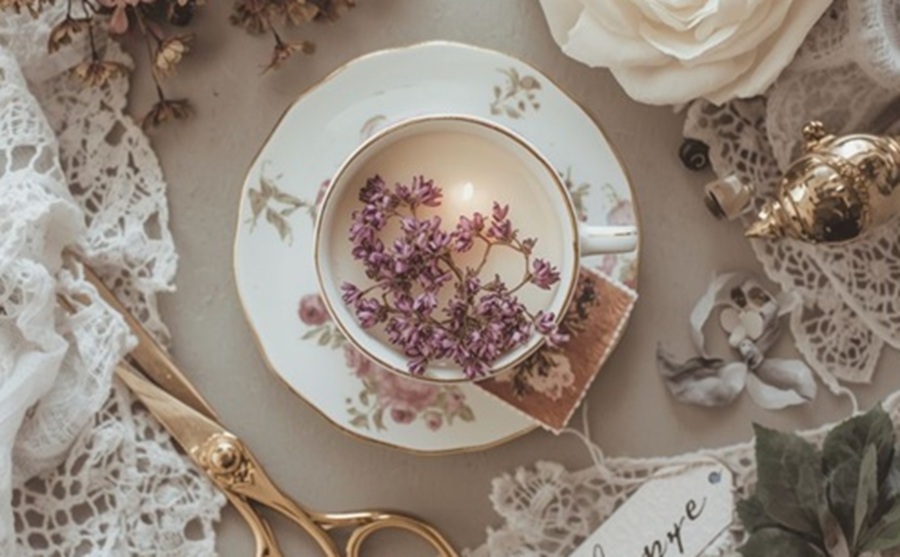
To create that vintage grannycore luxury look:
Choose teacups with:
- Florals
- Gold rims
- Ivory, blush, sage, or faded blue tones
- Delicate handles
- Matching saucers
Style the wax with:
- Creamy natural-looking tops
- Neutral wax color
- Minimal decoration on top so it still burns safely
Package with:
- Satin ribbon
- Tissue paper
- Vintage-style label
- Story card about the teacup
- Rigid gift box for premium orders
Photograph with:
- Lace
- Stacked old books
- Silver tray
- Soft lamp light
- Dried flowers or garden roses
That presentation is what helps move the candle from “cute craft” into “boutique gift.”
Related Reading
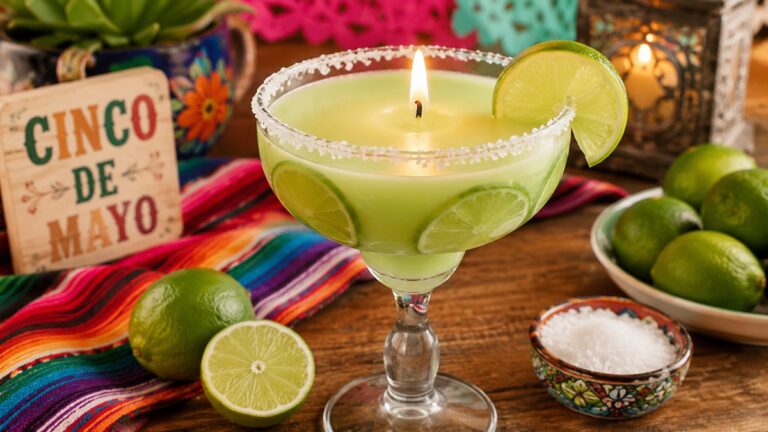
Want another fun candle idea to make and sell? These DIY margarita candles are festive, giftable, and perfect for craft fairs, Etsy shops, and seasonal side hustle income.
Learn How to Make DIY Margarita CandlesWhere to source teacups cheaply
Good places to look:
- Thrift stores
- Estate sales
- Yard sales
- Facebook Marketplace
- Antique malls
- Charity shops
- Flea markets
The best money making advantage here is that your materials can sometimes be sourced cheaply while the finished product feels expensive. A beautiful teacup bought secondhand can completely change the perceived value of the candle.
Best places to sell teacup candles
Teacup candles do especially well in places where people shop visually or buy gifts:
- Etsy
- Local craft fairs
- Holiday markets
- Antique mall booths
- Facebook Marketplace
- Your own Shopify or WordPress store
Because the product is so visual, strong photography matters a lot. If you can make the candle feel collectible, nostalgic, and gift-worthy, you have a much better chance of selling at the higher end of the range.
Product ideas that can help you stand out
Once you have the basic version down, try themed collections:
- English garden collection
- Tea party collection
- Romance collection
- Cottage rose collection
- Heirloom china collection
- Bridal shower favors
- Mother’s Day gift sets
- Christmas teacup candles
- Lavender bedtime collection
You can also sell:
- Matching saucer gift sets
- Two-candle bundles
- Seasonal scents
- Personalized gift notes
- Custom scent names
Common mistakes to avoid
The fastest way to lose profit is to skip testing or rush your presentation.
Avoid:
- Using cracked teacups
- Guessing wick size
- Adding too much fragrance oil
- Selling before test-burning
- Using weak photography
- Underpricing a beautifully styled candle
- Forgetting warning labels
The most important technical issues in container candles are wick performance, clean burning, and safe labeling.
Is this side hustle worth it?
If you enjoy hands-on projects and you naturally gravitate toward vintage home decor, teacup candles are a strong side-hustle idea.
They are not a get-rich-quick business. But they can be a very good small handmade product because they combine relatively approachable candle-making skills with strong gift appeal and premium presentation. Current marketplace pricing shows that buyers are already paying real money for teacup candles, especially when the vessel and styling feel unique or elevated.
The sweet spot is not just making a candle. It is making a candle that feels like a little treasure.
Make it safe.
Make it beautiful.
Make it feel special.